Few coins capture the bold spirit of American history quite like the Morgan Silver Dollar.
Large, heavy, struck in real silver, and born during one of the most transformative periods in U.S. history, the Morgan Dollar represents more than currency. It represents expansion, industry, the Old West, and the growing power of the American economy.
At Mesa Pawn in El Paso, Texas, Morgan Silver Dollars are among the most frequently brought-in collectible coins we evaluate. Some customers inherited them from family members. Others purchased them years ago as an investment. Many simply rediscover them tucked away in drawers or safes and want to learn more.
Whether you’re looking to sell a Morgan Silver Dollar or start collecting them, understanding their history and value can help you make confident decisions.
Let’s take a closer look at where these iconic coins came from — and why they continue to matter today.

The Birth of the Morgan Silver Dollar
The Morgan Silver Dollar was first introduced in 1878. Its creation was driven by the Bland-Allison Act, a federal law requiring the U.S. Treasury to purchase large quantities of domestically mined silver and convert it into coinage.
During the late 1800s, silver mining in the western United States was booming — particularly in Nevada and surrounding territories. The government needed a way to stabilize the silver industry while putting that silver into circulation.
Enter the Morgan Dollar.
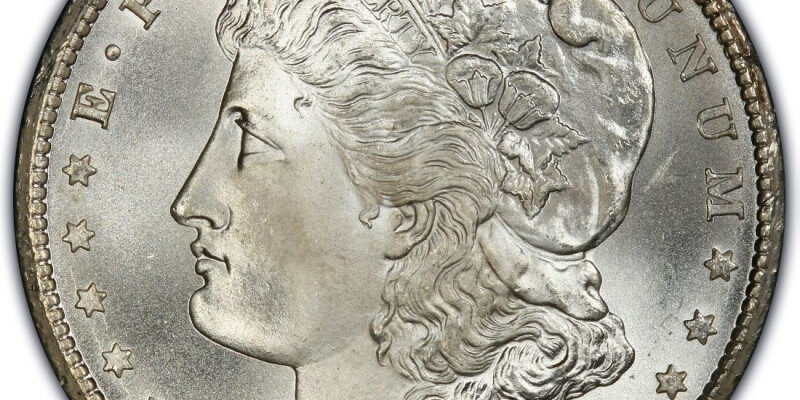
The coin was designed by George T. Morgan, an English engraver who had recently joined the U.S. Mint. His design featured:
-
Lady Liberty on the obverse (front)
-
A powerful American eagle on the reverse (back)
Interestingly, Liberty’s profile was modeled after a real American woman named Anna Willess Williams, giving the coin a distinctly American identity.
The Morgan Silver Dollar was minted from:
-
1878 to 1904
-
1921 (one final production year)
After 1921, the series was replaced by the Peace Dollar.
Each Morgan Dollar contains:
-
90% silver
-
10% copper
-
0.7734 troy ounces of pure silver
That silver content alone gives the coin intrinsic melt value. But for many Morgans, their collector value exceeds their metal content — sometimes significantly.

Why Morgan Silver Dollars Became So Popular
Morgan Dollars weren’t just everyday coins. They were symbols of American strength.
These large silver dollars circulated during:
-
The expansion of railroads
-
The height of western silver mining
-
The industrial growth of the late 19th century
-
The post-World War I economic transition
Their size and weight made them feel substantial. Even today, when you hold one, you immediately notice the difference compared to modern coins.
Collectors are drawn to Morgan Dollars because they offer:
-
Tangible silver value
-
Rich American history
-
Beautiful, detailed design
-
A wide range of collectible dates and mint marks
They are often one of the first “serious” coins new collectors purchase.

Understanding Morgan Dollar Mint Marks
One of the most important factors influencing a Morgan Dollar’s value is its mint mark — which indicates where the coin was produced.
To find it, turn the coin over and look beneath the wreath on the reverse side, just above the word “DOLLAR.”
Here are the mints that produced Morgan Silver Dollars:
Philadelphia Mint (No Mint Mark)
-
No mint mark appears on the coin
-
Produced the highest mintages
-
Many common-date Morgans originated here
If your coin has no letter under the wreath, it was struck in Philadelphia.
While many Philadelphia Morgans are common, certain dates can still carry collector premiums.
Carson City Mint (CC)
-
Marked with “CC”
-
Produced in Nevada during the height of the silver mining boom
-
Extremely popular among collectors
Carson City Morgans have a special connection to the American West. Because they were minted in smaller quantities and tied to Nevada’s silver rush era, they are often highly desirable.
Even common-date Carson City coins typically command stronger premiums than their Philadelphia counterparts.
San Francisco Mint (S)
-
Marked with “S”
-
Known for strong strike quality
-
Several scarce and key dates
San Francisco Morgans are respected for their craftsmanship. Some years are relatively common, while others are highly sought after by serious collectors.
New Orleans Mint (O)
-
Marked with “O”
-
Minted in the South
-
Wide range of values depending on year
New Orleans Morgans have their own collector following. Some dates are easy to find, while others are key coins in the series.
Denver Mint (D)
-
Marked with “D”
-
Only produced Morgan Dollars in 1921
-
Represents the final year of the series
The 1921-D Morgan is part of the final production year before the transition to the Peace Dollar.

What Determines a Morgan Dollar’s Value?
Not all Morgan Silver Dollars are worth the same amount.
Several factors influence value:
1. Mint Mark
Coins from certain mints, especially Carson City, often carry premiums.
2. Year
Some years had lower production numbers, making surviving examples scarcer.
3. Condition (Grade)
Condition dramatically affects value. Coins are graded on a scale that measures wear, luster, and surface preservation.
4. Silver Price
Because each Morgan contains nearly 0.8 ounces of silver, precious metal market prices influence baseline value.
5. Collector Demand
Market trends can shift. Certain dates become more popular depending on collector interest.
Some Morgans are valued close to their silver melt value. Others — particularly rare dates or high-grade examples — can be worth hundreds or even thousands of dollars.
That’s why professional evaluation matters before selling.
The Importance of Condition
Condition can transform an average coin into a standout collectible.
A heavily circulated Morgan may show:
-
Flattened details
-
Surface wear
-
Loss of luster
An uncirculated example, on the other hand, may still display:
-
Sharp design details
-
Strong mint luster
-
Minimal surface marks
Professionally graded coins (often called “slabbed” coins) are authenticated, graded, and sealed in tamper-resistant holders by third-party grading companies. These are often preferred by serious collectors because the grade has already been verified.
At Mesa Pawn, we evaluate both raw and graded coins, explaining what condition means for value.

A Strong Choice for New and Experienced Collectors
Morgan Silver Dollars are appealing for several reasons:
-
They contain real silver
-
They are widely recognized
-
They are easy to buy and sell
-
They offer historical depth
-
They come in a wide range of price points
For new collectors in El Paso, Morgans are often an accessible entry point into numismatics.
For experienced collectors, filling date-and-mint-mark gaps can become an enjoyable pursuit.
Some collectors focus exclusively on Carson City issues. Others build full year sets. Some simply collect examples with attractive toning or high grades.
There is flexibility in how you collect — and that’s part of the appeal.
Why Precious Metals Continue to Attract Interest
In times of economic uncertainty, precious metals often gain attention.
Silver and gold have been trusted stores of value for centuries. Unlike paper assets, they are tangible. You can hold them. Weigh them. Store them.
In a border city like El Paso — where commerce and trade are part of daily life — tangible assets like silver coins continue to resonate with buyers and sellers alike.
Morgan Silver Dollars combine both worlds:
-
Intrinsic metal value
-
Historical collector demand
That dual appeal helps explain their lasting popularity.

1896 Morgan Dollar coin stands against a stack of coins.